Emergencies do not await the safety team to end up a conference, or for a supervisor to return from lunch. When something fails in a work environment, the very first three minutes established the tone for everything that complies with. That is why emergency situation wardens, and specifically primary wardens, train for quality under pressure, not simply theoretical understanding. The Australian devices of competency PUAER005 Operate as component of an emergency situation control organisation and PUAER006 Lead an emergency situation control organisation support that ability. Together, they construct a bridge in between a written strategy and actual action, with interaction, emptying, and liability at the centre.
I have overcome emptyings that began with charred toast, and others triggered by defective switchboards and a real fire front pressing toward the website. The differences are evident in hindsight. The continuous, when it works out, is a warden team that recognizes who is doing what, how details moves, and just how to count everyone out without coming down right into guesswork. The following results are the ones that consistently transform training hours into risk-free departures and clean handovers to firemens and paramedics.
How PUAER005 and PUAER006 fit together
The PUAER005 training course, frequently provided as PUAER005 run as component of an emergency control organisation, is the foundation for fire warden training. It develops the warden's operational muscle memory: elevate the alarm, assess, connect, evacuate, sweep, record. The unit assumes there is a chief warden guiding the broader feedback. In a normal building, these wardens use identifiable hats or vests, handle details areas, and follow the emergency situation response plan with a predisposition for action.
PUAER006, generally called PUAER006 lead an emergency control organisation, takes the action up to management. The chief warden works with info from numerous wardens, deals with the Emergency situation Control Organisation (ECO), chooses regarding partial or complete discharges, and handles the interface with the attending emergency situation solutions. The program is less regarding a single person's campaign and more concerning structured leadership, delegation, and decision-making with incomplete information. In method, both devices are usually delivered with each other as a warden course and a chief warden course, either on the very same day or in sequence.
For learners, the distinction feels like relocating from playing a placement to calling the play. For organisations, the combination implies redundancy: if the chief warden is off-site, a skilled deputy can step up without improvising.
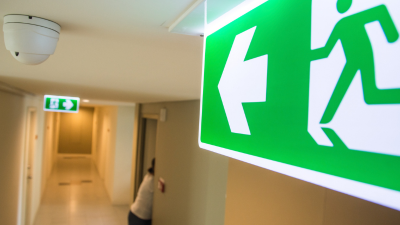
Outcomes that matter: functional interaction under stress
Communication under stress needs both a network and a self-control. PUAER005 drills the fundamentals for wardens: calm voice, brief sentences, and regular wording. When a warden claims, "Level two clear, 2 wheelchair helps, one missing from space 204," the phrase is not casual. It is a structured handover that a chief warden can analyze within seconds, and it matches the tally board or digital visit use.
The PUAER006 training course includes a layer of controlled cadence. Chief wardens discover to establish a rhythm that maintains the ECO integrated. A regular pattern: accumulate standing records in a repaired order, repeat key points, confirm activities, and assign follow-ups. Due to the fact that multiple wardens talk at once when alarm systems are blaring, disciplined turn-taking over the radio issues. Training enhances that the chief warden sets top priority and tempo. You listen to the difference on the day: fewer overlapping transmissions, faster cross-checks, much less ambiguity.
It also implies plain language. Some websites like phrases, which is a responsibility throughout a gas leak or smoke spread. Programs show wardens to call hazards of what they are. "Smoke in stairwell An approximately level 4" beats "We have a stratified incursion." The goal is not to excite anybody, it is to get people moving safely.
Evacuation is a decision, not a reflex
Pulling the alarm system and clearing a structure has costs. If you leave a low-risk issue in a medical facility's intensive care unit, you may produce even more danger than you fix. If you postpone when smoke is spreading in a skyscraper with a pressurised stairwell, you date a various type of danger. PUAER006 focuses on decision-making criteria and timing, not rule-following for its own sake.
The best-trained principal wardens make use of three filters. First, what is the hazard, and how is it altering? Second, what are the barriers and defenses on website, from fire doors to suppression systems to shelter-in-place zones? Third, who is prone, consisting of site visitors, service providers, and anybody with flexibility limitations? The communications lots complies with those three filters. You will listen to the chief warden require a partial evacuation by area, or for a vertical staging pattern that clears levels above and listed below the incident floor. You will certainly additionally hear them call a stop to lifts, coordinate safety to meet firemans, and verify stairwell status prior to ordering movement.
The PUAER005 program supports this by teaching wardens exactly how to run their locations with minimum hassle. A great flooring warden reads the room, not simply the plan. They'll remove out unneeded guidelines and go straight to hints: "Leave valuables. Follow me. Usage stairwell B. Stay on the left." When somebody ices up, they do not say, they assist and relocate. The training highlights that wardens are not bouncers, and they are not amateur firemens. Their job is regulated emptying, not heroics.
Accountability is greater than a roll call
Most people think about a roll telephone call as the head count at the setting up area. That is one part of accountability, and the least flexible. The effort starts earlier. Prior to a case, the warden group agrees on how to track that is on website. For a small workplace, it might be a sign-in sheet. For a warehouse, it could be a site visitor monitoring system, specialist licenses, and swipe card information. PUAER006 pushes primary wardens to test whatever system they inherit. If the data lags the reality of the floor by half an hour, you can not rely upon it alone.
During an evacuation, liability is not a solitary action. It is a chain: area sweeps, area flags on doors or spoken checks, records up to the chief warden, and an assembled condition that separates recognized risk-free, well-known missing out on, and unofficial. The chief warden's log ought to reveal time stamps, resource of puafer006 course information, and unresolved items. This way, when firefighters arrive, the handover is crisp: "We have one verified unaccounted individual, last seen in the northwest lab at 10:42, feasible shelter-in-place due to chemical hazard. Stairwells A and C clear, B compromised by smoke to degree 3."
PUAER005 sustains this with practical sweep strategies and the technique to never ever note an area clear unless you have literally checked it. It additionally sets expectations regarding when to stop browsing. There is a line in between complete and negligent. If heat, smoke, or architectural issues climb beyond training, wardens back out and report the risk.
Fire warden training demands and the function of the ECO
Workplaces vary, but the fire warden requirements in the workplace have usual strings. A reasonable method begins with a risk account. A tiny single-storey office with twenty staff and two leaves has different demands than a skyscraper occupancy counting on base structure systems. Yet both need a trained Emergency situation Control Organisation with a chief warden, location wardens, and communications duties specified. The PUAER005 training course equips wardens for daily readiness and response. The PUAER006 course prepares the chief emergency warden to collaborate those roles under stress, and to lead exercises that emerge gaps.
Frequency of drills issues. Yearly exercises please minimums, but twice-yearly drills are far more efficient, specifically when lineup spin is high. Rotate situations: a daytime event, an after-hours event with less wardens, a blocked stairwell, an impaired lift, a shelter-in-place instruction for a chemical event. The difference between a paper strategy and lived capability determines whether individuals wait at the incorrect leave while smoke makes it unusable.
For companies with shift job, contractors, or public patrons, the fire warden training requirements include tailored briefings. Wardens ought to know how to sweep groups, just how to deal with language barriers, and when to make use of aesthetic signs such as arm signals if a system fails. I have actually seen wardens improvisate published cards with the word EXIT in big font, which showed useful during a loud plant closure. Training needs to urge that functional ingenuity, within the restrictions of security protocols.
The question of hat and safety helmet colours
Visibility counts. In a lot of Australian work environments, wardens wear coloured helmets or hats for fast identification. The colour conventions can vary by website or industry, however a common system is red for fire wardens and white for the chief warden. Where a concern turns up, it frequently sounds like, what colour helmet does a chief warden wear? or chief warden hat colour. If your site makes use of a different system, such as yellow for interactions and green for first aid, make sure people know it prior to a drill, not during a discharge. Training ought to include an aesthetic short and posters in shared areas.
People also ask about the chief fire warden hat colour or the fire warden hat colour because they think a nationwide standard. The trick is consistency within your workplace. If the chief warden hat adjustments colour after a procurement button, upgrade signs, the emergency plan, and pierce instructions. The best method is to provide hats to called duties, not simply maintain them in a cabinet. If the individual shows up late and the hat does not, you have lost the point of the system.
Building skills: what an excellent training course really looks like
Look very closely at a PUAER005 course that produces positive wardens, and you will certainly discover high rep of core jobs with clear feedback. Individuals exercise alarms and statements, radio usage, door checks, stairwell management, and setting up factor configuration. They manage side cases: a locked office, a confused visitor, a mobility-impaired colleague. The trainer runs short, realistic circumstances that compel choices. Not every little thing mosts likely to strategy, which is the point.
A PUAER006 course for chief warden training must be much more scenario-driven. It needs a command blog post configuration, a communications table, a website plan, and a log. Students must practice assigning tasks to replacement chief wardens, arranging for a 2nd evacuation site if the wind shifts, and asking for energies seclusion. They ought to practice the handover to Fire and Rescue with a two-minute briefing and then respond to concerns. Several of the best sessions I have actually seen include a curveball, like a warden that stops working to report, or a dud during an actual thunderstorm. The course learns to separate signal from noise.
Where the courses share ground is in reflective debriefs. After each scenario, the trainer must lead a structured review: what functioned, what lagged, what details showed up late, and what will transform for the following run. Over three or 4 rounds, performance noticeably tightens. This is what emergency warden training should provide: not self-confidence for its very own purpose, yet proficiency you can prove.
The chief warden's responsibilities, and just how to take on them
Chief fire warden duties check out like a checklist until you execute them under stress. There is strategy, yes, however there is also human leadership. Individuals copy the chief warden's tone. If the principal is ruffled, wardens rush or delay. If the principal is steady and clear, wardens match it. The chief warden requirements in a huge website consist of succession preparation. If the chief is off-site, who actions in? If the replacement gets here 10 minutes late, that begins the first control? Build a deepness graph and drill it.
Chief fire warden duties additionally include the silent, unglamorous job between events: reviewing and updating the strategy, verifying wardens and deputies by name, lining up with building monitoring, checking radios and extra batteries, validating evac representations on wall surfaces match the present layout, and arranging training for new hires. This is where PUAER006 changes from program content to practice. A solid chief warden deals with the plan as a living file and the ECO as a team that requires maintenance like any other.
Fire wardens are not firemens, and why that matters
Fire warden training occasionally inherits misconceptions from popular culture. Wardens do not lug tubes. They are not there to overthrow firemans or to come back a structure once left. They might utilize a mobile extinguisher for an incipient fire just if educated, the path behind them stays clear, and the danger is acceptable. The decision to try a little extinguishment is not part of every situation, and it should never ever postpone an evacuation. Websites that press "we will place it out" perspectives hold back the option to weigh dangers thoroughly, which is the reverse of what PUAER005 and PUAER006 teach.
An anecdote to highlight the distinction: at a manufacturing site, an equipment captured a tiny oil fire. A warden with recent training assessed the flame, the proximity to egress, and the extinguisher type on hand. Another warden began moving people. The initial effort stopped working because of an incorrect extinguisher choice. The chief called immediate evacuation and shut the line. Fire solutions got here to a clear plant with no injuries. The lesson was not about valor, it was about self-control. The follow-up transformed extinguisher placement and signage, and the following drill folded in that learning.
Common risks and how to blunt them
Communication devices fall short. Radios run out of charge. The PA system crackles. The individual who constantly does the headcount calls in unwell. Training ought to call these challenges and rehearse workarounds. When I investigate sites, the exact same concerns appear.
First, insufficient or stagnant passenger listings. Resolve it with multiple data sources, and instruct chief wardens to triangulate rapidly. Second, assembly points selected for comfort instead of safety. If your factor is downwind from a packing dock, rethink it. Third, wardens without authority to remove a hallway since a supervisor things. The ECO needs formal power in the policy, backed by leadership. 4th, mobility-impaired evac strategies that rely on a single person that works only weekdays. Construct redundancy, and test it. Fifth, building alarm systems that seem different throughout occupancies. If a high-rise base structure system superimposes an occupant system, wardens require to know what each signal means.
PUAER005 and PUAER006 do not eliminate these pitfalls by magic. They outfit the group to spot them early, log them, and close them.
What the most effective websites do between drills
Competence decays without usage. The best websites run brief refresher courses every quarter, also if formal accreditation cycles are longer. A twenty-minute radio drill, a quick stairwell examination, or an examination of the assembly location lights expenses little and keeps readiness. Principal wardens routine cross-training, so wardens exchange floorings and learn alternate routes. They line up with security and facilities, so the ECO and building groups share a sight of dangers and assets.
Visual aids assist. Clear maps at the warden station, a printed quick-start sheet for the principal with radio networks and numbers, and a whiteboard design template for case logging all conserve precious secs. One logistics firm placed a weather condition vane near the setting up location. Throughout a chemical leakage 2 years later, that vane told the tale faster than a weather app. Information like that come from people who have walked the site and envisioned problems in three dimensions.
Choosing a company for warden training
Not all fire warden course service providers coincide. Try to find fitness instructors who inquire about your structure design, tenancy patterns, and recent incidents prior to they start. If an instructor gets here with a one-size deck and overlooks your stairwell pressurisation or your split tenancy, you will certainly get a generic session that looks clean and leaves actual gaps untouched.
For PUAER005 and PUAER006 particularly, ask how much time is assigned to useful circumstances. Anything under one third for PUAER005 and under fifty percent for PUAER006 is possibly light. Inquire about course dimension. Twelve to fifteen students per trainer is a workable range. Over that, individuals spend even more time waiting than practicing. Confirm whether the analysis is observation-based with clear criteria, not just numerous option. Ultimately, inquire about post-course documentation: you want a document of competencies, attendance, and any type of site-specific findings that require follow-up.
A brief pre-incident list that pays off
- Verify ECO roster: names, roles, back-ups, and contact numbers are current. Test communications: radios charged, networks verified, PA and alarm systems functional. Walk the egress: stairwells clear, doors self-close, signs exact, lighting operational. Update owner information: team list, contractors, site visitors, and known wheelchair needs. Stage the set: chief warden log, website strategy, hi-vis and hats, spare batteries, torch.
Keep this to a single web page, review it monthly, and connect it to onboarding so new wardens acquire a living system rather than a binder.
Where hat colours fulfill human factors
Colour coding aids, yet just if individuals search for and recognize what they are seeing. During one drill, a number of employees disregarded a young warden giving proper directions since he did not look like a senior supervisor. After comments, the site included a short induction slide: "In an emergency situation, adhere to wardens. Red hats - wardens. White hat - chief warden. Their direction bypasses business-as-usual." That single sentence, repeated at group meetings, made a difference. Symbols work when culture enforces them.
The payback: sharper choices, faster leaves, much better handovers
When you placed PUAER005 and PUAER006 along with wise method, three end results stand apart. Interaction ends up being crisp, so sound drops and action increases. Evacuation becomes an organized choice, not a panic reflex, which protects both speed and security. Accountability comes to be a moving procedure, from move to assembly to handover, rather than an agitated head count at the end.
The remainder of the advantages are subtler. New staff members feel more secure due to the fact that they see a system that works. Specialists appreciate the website's professionalism. Executives rest a little better since a near miss out on did not become a catastrophe. This is not abstract. In the last five years, I have seen teams halve their discharge times after tightening their ECO and retraining, and I have actually viewed firefighters show up to concise, accurate rundowns that saved mins when minutes mattered.
If you lead a site, deal with fire warden training and chief warden training as persisting financial investments. If you work as a warden, have your duty the way you would any kind of safety-critical task. If you wear the white hat, remember that management in an emergency is specifically like management on an average day, just louder and faster. Quality, regard, and follow-through lug you a lengthy way.
Frequently asked, briefly answered
What is the difference between a warden course and a chief warden course? The warden course, lined up to PUAER005, concentrates on operating tasks within the ECO. The chief warden course, aligned to PUAER006, focuses on leading the ECO and making evacuation choices, working with communications, and liaising with emergency situation services.
What colour safety helmet does a chief warden use? Lots of work environments make use of a white headgear or hat for the chief warden and red for wardens. Always follow your site's requirement and guarantee everyone recognizes it.
What are the fire warden requirements in the workplace? You require a formed ECO with named roles, recorded procedures, normal training and drills, easily accessible discharge layouts, and a method to make up residents, including visitors and specialists. The information depend upon your building type and risk profile.
How often should emergency warden training run? Accreditation cycles differ, yet functional refreshers two times a year and an official evaluation every one to two years keep skills alive. Change the scenarios so you do not exercise the exact same emptying every time.
Do wardens use fire extinguishers? Just if trained, only at incipient phase, and only when emptying is not postponed and a secure egress path exists. The main obligation is safe evacuation and liability, not firefighting.


Final thought
An emergency warden course is not a tick-box. It is a rehearsal for a day you hope never ever arrives. When it does, interaction, emptying, and responsibility decide results. The PUAER005 course and the PUAER006 training course give the framework. Your site's practice provides the side. Place both to work, keep them fresh, and your individuals go https://rylanlemt180.image-perth.org/warden-training-drills-designing-effective-practice-scenarios home safe.